
Improving Customer Identification in a Telecom Retail Store with an Arrival Kiosk
Timeline: Nov 2024 – Jan 2025
My Role: UX Researcher
Company: Leading U.S. telecom provider
Role Location: India (serving U.S. market, conducting customer interviews with U.S. audiences)
Tools Used: UserTesting.com, Figma (for prototype feedback), Google spreadsheet and Google slides
Business Problem
The telecom retail store faced two recurring customer experience issues:
- Agent Overload & Confusion: During peak hours, a limited number of service representatives struggled to manage multiple arrivals, causing delays.
- Privacy Concerns: Customers disliked having their names called out publicly, leading to discomfort and occasional negative feedback.
Previous attempts included:
- Displaying first names on TV screens.
- Calling out the type of problem (“Billing issue,” “SIM replacement”, “trade off’s” etc.).
- Asking customers to form physical queues.
However, none were effective: they either compromised privacy, confused customers, or were operationally impractical.
Proposed solution
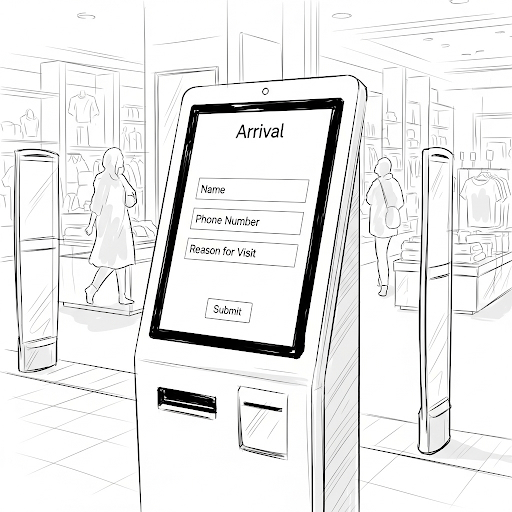
The company decided to trial an arrival kiosk to register customers upon entry.
The kiosk would:
- Record basic identification details (first name, mobile number, reason for visit).
- Send a confirmation message to customers about the wait times
- Provide representatives with real-time updates on the number of registered customers and their reasons for visiting, giving them a clear heads-up on the current situation.
Initial Friction:
Early observations showed that customers were reluctant to use the kiosk when:
- Customers perceived their issue as “too small” to fill in their details in kiosk.
- When the store was empty and representatives were easily available.
- Few customers believed the kiosk would slow down their interaction.
My research process
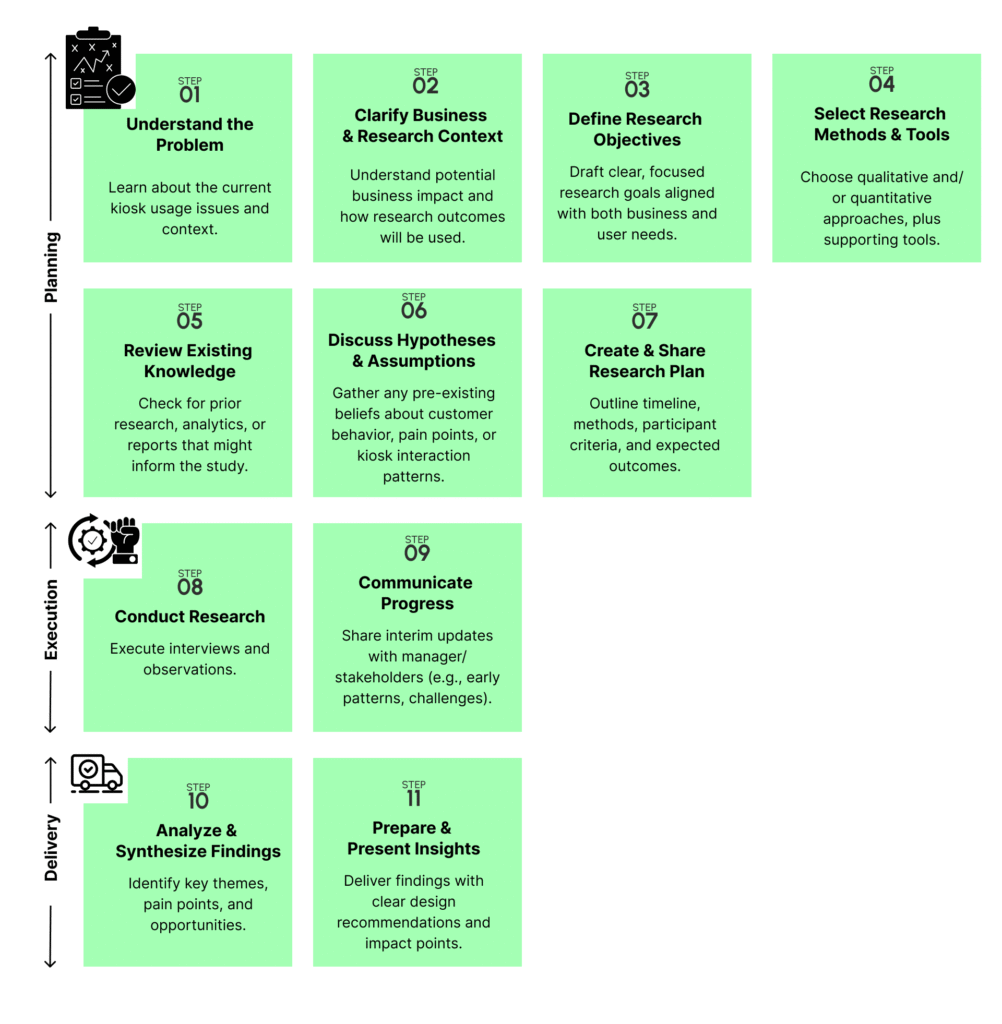
Research Objectives
- Understand customer perceptions of using a kiosk for identification.
- Explore privacy and convenience factors influencing kiosk adoption.
- Identify design or process improvements that could increase usage rates.
Research Methodology
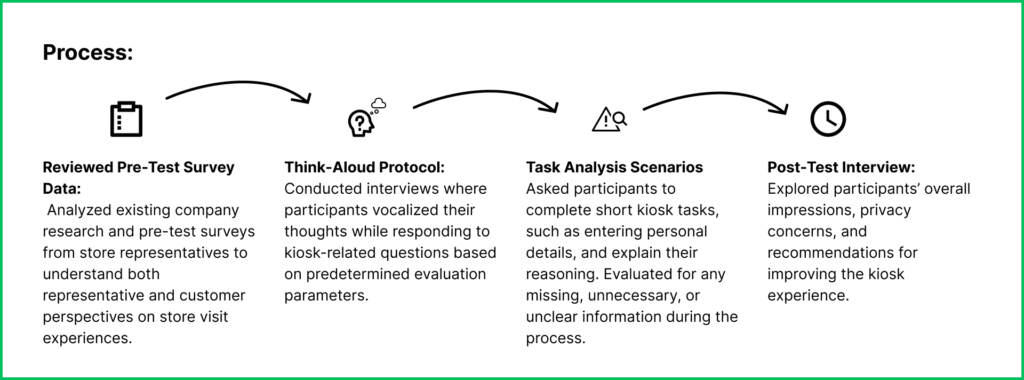
Approach: Moderated interviews via UserTesting.com with 18 participants.
Profile:
- Age: 22–65
- Only existing telecom customers
- Urban retail store visitors
- Balanced gender representation
Key research findings
Insights
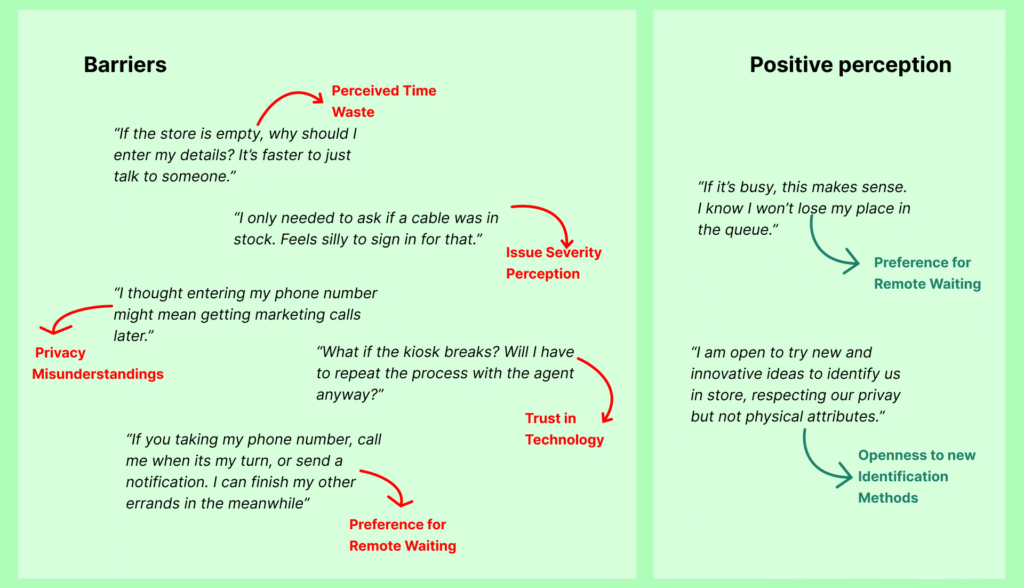
- Participants were more inclined to use the kiosk during busy hours, but avoided it when the store was quiet, opting for direct interaction.
- Some participants feared potential misuse of their details, stressing the need for clear, visible data usage policies at the kiosk.
- Many preferred providing their phone number to get notified when it was their turn, allowing them to run other errands.
- For small queries, participants preferred a short “Quick Check-In” process instead of detailed form-filling.
- Adoption depended on whether the kiosk felt faster and more efficient than speaking to an agent.
- Some participants – especially older visitors – requested in – person guidance during check-in, either at the entrance or when entering details.
- Participants related the kiosk experience to systems they had used before: Token numbers at motor vehicle departments; First name + location announcements at hospitals; Token numbers displayed on large screens at passport offices.
Other Findings
Alternative methods of customer identification.
During the course of the interviews, my curiosity was piqued by an emerging theme: alternative methods of customer identification. After noticing this pattern in the first few conversations, I began exploring it in subsequent interviews to uncover participant preferences and past experiences.
I specifically asked about their familiarity and comfort with different identification systems, such as:
- Large screen displays in waiting areas showing customer sequence numbers and estimated wait times.
- Token numbers received via phone or printed slips.
- Queueing by reason for visit, where participants are directed to wait near a relevant representative.
- Visual identification markers, such as shirt color or other visible tags to help representatives recognise them.
From these discussions, I mapped both positive and negative experiences, along with expectations that could shape future solutions.
Key takeaways while udnerstanding ‘Alternative methods’
- Participants welcomed new identification approaches that respected their privacy and avoided reliance on physical attributes.
- Participants were more open to innovative identification methods during peak seasons or sales, where crowd management was essential.

My reflection as a researcher –
Sometimes, interviews naturally take a turn towards topics outside the original research scope. While not part of the initial objectives, these off-script conversations can reveal valuable context or emerging needs that may influence future designs. This is one such example, where exploring beyond the set questions uncovered fresh opportunities for improving customer experience.
Recommendations
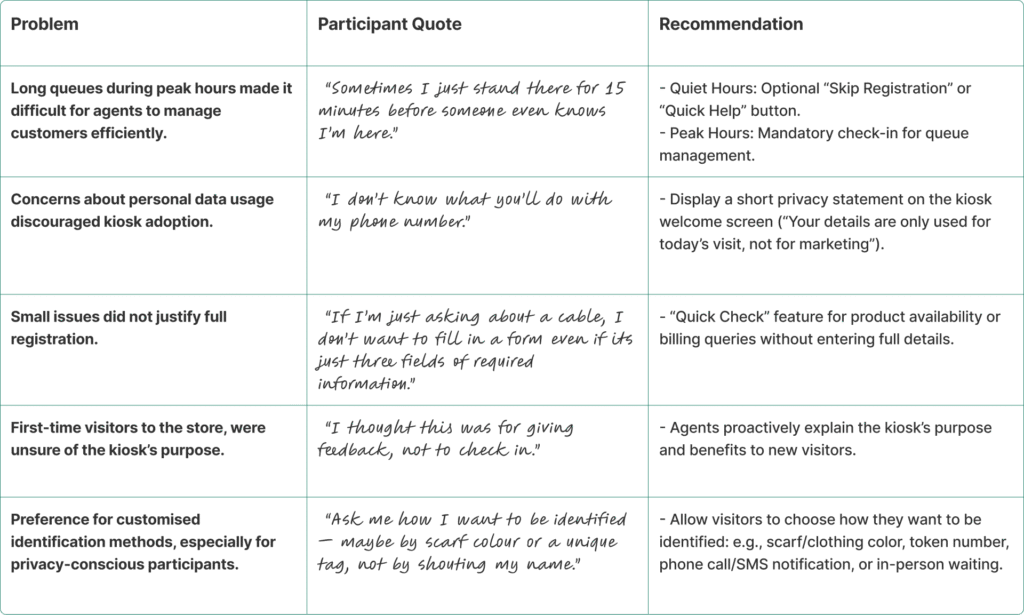
Impact
When I first presented my insights to stakeholders, they were receptive and supportive, as many of the issues had already been hinted at in survey data — my research validated them. It was also my very first project, and my manager was satisfied with the depth and clarity of my work.
Two months later, I had the opportunity to present to a wider audience, including marketing and design teams. That session brought a proud moment — the team decided to implement two key recommendations:
- Giving customers a choice in how they want to be identified.
- Displaying a clear statement on the kiosk that details are used only for the current visit, with no future contact.
Since then, designers have approached me for quick A/B testing tasks, which has been empowering and a sign that my work is trusted.
My Reflection
This project reinforced a core truth in both Dutch and global retail UX: adoption is less about the technology itself and more about context, trust, and perceived efficiency. Aligning the kiosk experience with actual participant behavior patterns led to solutions that respected privacy, saved time, and improved operational flow.
Working in a large organization taught me that change is gradual — I do not yet have data on kiosk usage rates, changes in wait times, or CSAT trends. Prioritization cycles mean not every issue is addressed instantly. Still, seeing my recommendations adopted and influencing future design work has been a strong validation of my approach.
Thanks for reading!
Feel free to check out some of my other projects or if you have any questions about the research process for this study, feel free to contact me and I would be happy to go over in more detail!